 Need Professional Advisor ?

By David Delgado | Freedom Choice Lending
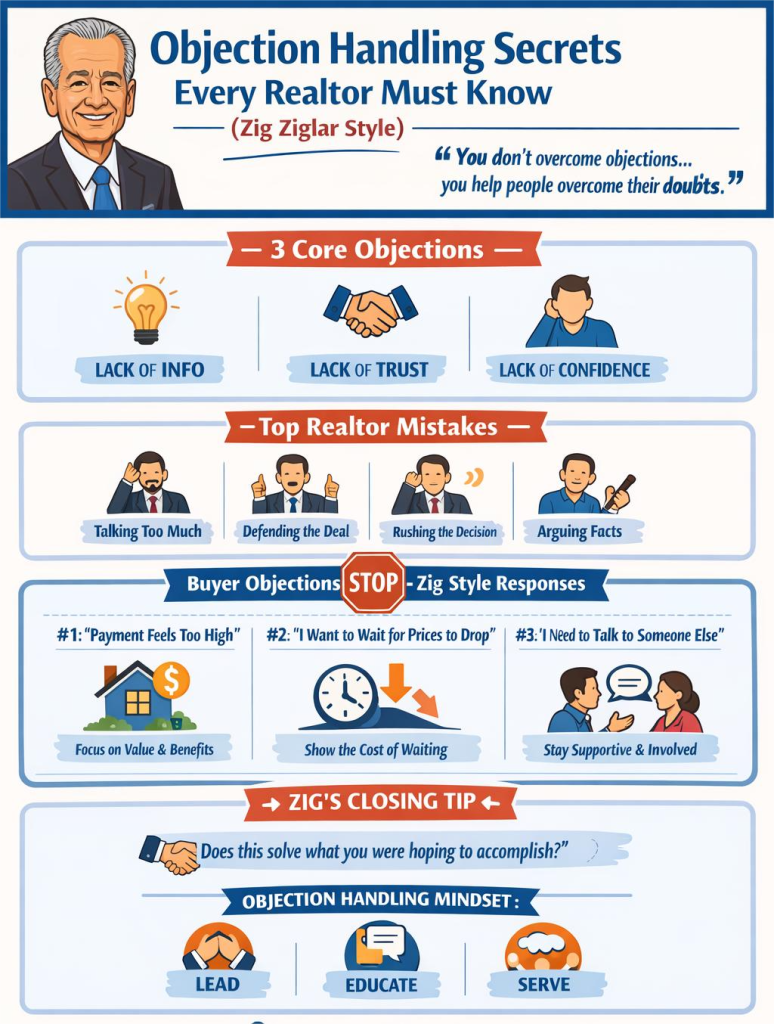
Objections aren’t the problem — unhandled objections are.
Buyers don’t say “I need to think about it,” “The payment feels high,” or “I’m not ready yet” because they want to stall you.
They say it because they’re uncertain, afraid, or missing clarity.
One of the greatest sales minds of all time, Zig Ziglar, taught a simple philosophy that still works today:
“You don’t overcome objections — you help people overcome their doubts.”
Let’s break down objection handling the right way — the way that builds trust, positions you as the expert, and moves buyers forward without pressure.
First: Reframe What an Objection Really Is
An objection is not rejection.
It’s a request for more information, reassurance, or confidence.
Most buyers:
- Are afraid of making the wrong decision
- Are worried about money and long-term commitment
- Don’t fully understand the process
- Have past trauma from bad advice or market headlines
Your job isn’t to “win” the conversation.
Your job is to guide them through uncertainty.
Zig Ziglar’s Golden Rule of Objections
Zig believed objections fall into three core categories:
- Lack of information
- Lack of trust
- Lack of confidence (in themselves, the market, or timing)
If you identify which one you’re dealing with, the objection almost always dissolves.
The #1 Mistake Realtors Make With Objections
❌ Talking too much
❌ Defending the deal
❌ Arguing facts
❌ Rushing the decision
Zig Ziglar taught that listening sells more than talking.
Before responding, ask:
“Can you help me understand what specifically concerns you?”
That single question lowers defenses instantly.
Objection #1: “The Payment Feels Too High”
What They’re Really Saying:
“I’m scared of committing to something I don’t fully understand.”
Zig-Style Response:
“Totally fair — no one wants to feel stretched. Let’s look at what that payment replaces instead of what it costs.”
Then guide them through:
- Rent vs. ownership comparison
- Equity growth over time
- Payment control vs. rising rents
- Buying power with lender strategies (rate buydowns, credits, programs)
💡 Clarity beats pressure — every time.
Objection #2: “I Want to Wait for Rates / Prices to Drop”
What They’re Really Saying:
“I’m afraid of bad timing.”
Zig-Style Response:
“Waiting feels safe — but can I show you the cost of waiting?”
Then educate, don’t convince:
- Market cycles
- Equity gained vs. rent lost
- Refinance flexibility
- Appreciation vs. interest rates
Zig used to say:
“People don’t buy when it makes sense — they buy when it makes sense to them.”
Your role is to show the full picture.
Objection #3: “I Need to Talk to Someone Else”
What They’re Really Saying:
“I’m unsure and need reassurance.”
Zig-Style Response:
“Of course — and when you do, what questions would you like answered so I can make sure you have everything you need?”
This:
- Shows respect
- Keeps you involved
- Positions you as a guide, not a salesperson
Confidence grows when buyers feel supported, not cornered.
The Zig Ziglar Close (That Doesn’t Feel Like a Close)
Zig believed the best close happens before the decision.
Instead of:
“So are you ready to move forward?”
Try:
“Based on what we’ve talked about, does this solve what you were hoping to accomplish?”
If they say yes, the close happens naturally.
Why Objection Handling Is a Skill — Not a Script
Scripts fail when emotions show up.
Skills win because they:
- Adapt to the buyer
- Build rapport
- Create trust
- Reduce fear
The best agents don’t “handle objections.”
They prevent them through education and partnership.
Final Thought for Realtors
Every objection is an opportunity to:
- Lead instead of sell
- Educate instead of convince
- Serve instead of pressure
And when you approach conversations with Zig Ziglar’s mindset —
helping people get what they want —
you’ll naturally get more yeses.
Leave a Reply